
Retaining Walls for Adelaide Clay & Reactive Soils

Living in the Adelaide Hills or Northern Suburbs? Don’t let shifting clay destroy your backyard. Expert retaining wall tips from the Reltona Constructions team.
Is Adelaide’s Clay Soil Ruining Your Retaining Wall? Here’s What You Need to Know
If you live in Adelaide, you already know our weather loves to jump from one extreme to the other. We get bone-dry, scorching summers followed by sudden, heavy winter downpours. While we adapt to it, our ground doesn't handle it quite as gracefully.
If you’ve noticed a retaining wall in your backyard starting to lean, crack, or look a bit structural unstable, you aren't alone. One of the biggest topics Adelaide homeowners are researching right now isn't just about aesthetics—it’s about why their soil is moving so much, and how to stop their walls from failing.
Let’s look at what is actually happening beneath your feet and how to build a wall that stands its ground.
The Silent Wall-Killer: Reactive Clay
A huge portion of Greater Adelaide—especially across the Adelaide Hills, the North-Eastern suburbs (like Golden Grove and Greenwith), and parts of the Southern vales—sits on what engineers call highly reactive clay soil.
Think of this clay like a giant sponge:
In winter: It absorbs rainwater, expands heavily, and pushes forward with immense weight against the back of your wall.
In summer: It dries out, shrinks, cracks, and leaves gaps.
This constant pushing and pulling puts incredible stress on a retaining wall. If a wall wasn’t designed to handle these specific soil shifts, it will eventually start to bow or lean forward.
Steel & Concrete: The Adelaide Standard for Tough Ground
Because our soil moves so much, traditional timber sleeper walls often struggle. Timber flexes, and over time, the wet clay rots the wood and pushes it out of alignment.
To beat Adelaide’s reactive clay, you need materials that simply won't budge:
Concrete Sleepers with Steel H-Beams: This is arguably the most reliable setup for heavy-duty soil retention. The steel posts are bored deep into the solid ground, and the heavy concrete panels handle the lateral pressure of expanding clay without breaking a sweat.
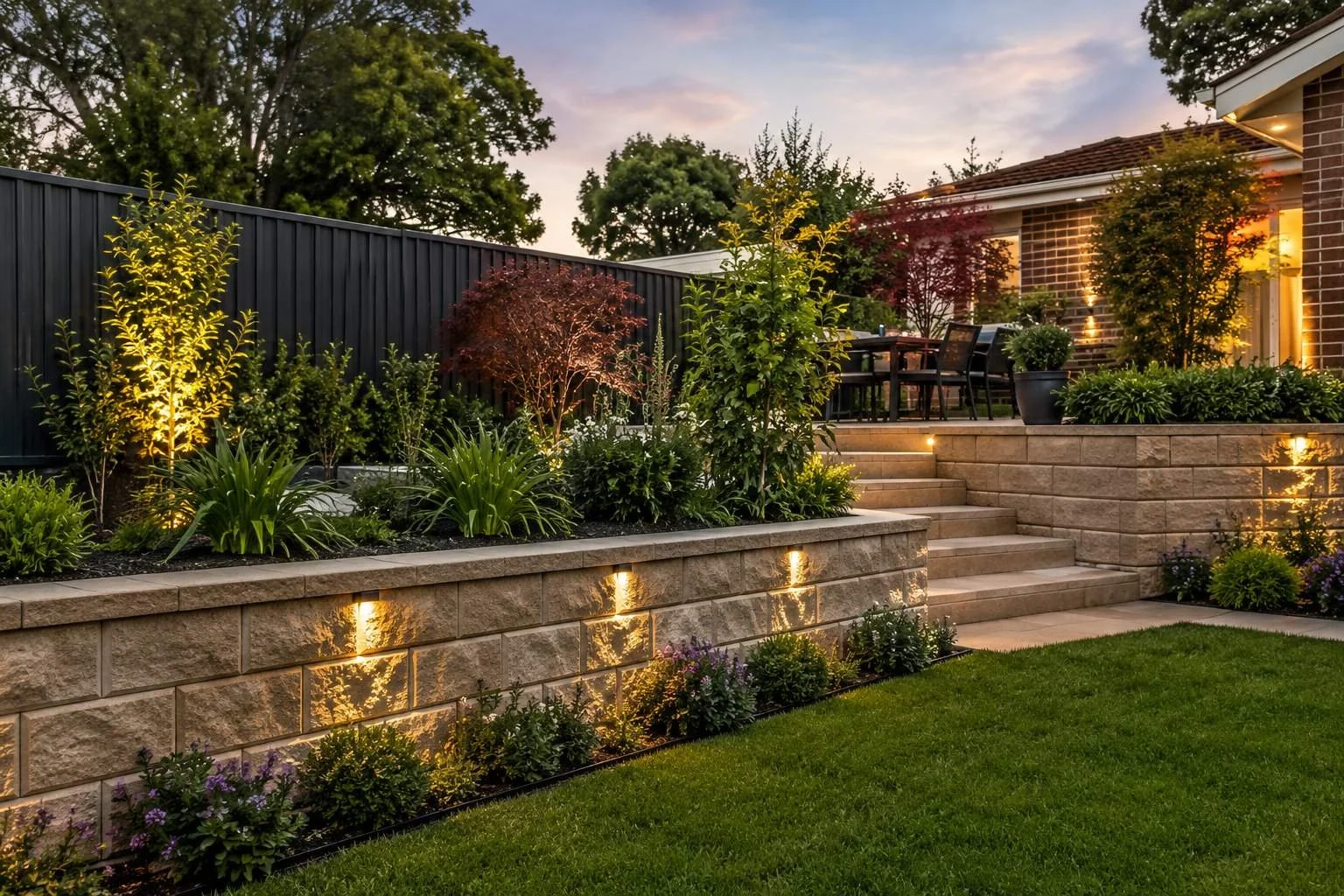
Versaloc Interlocking Blocks: If you prefer a clean, modern masonry look, interlocking dry-stack blocks like Versaloc are fantastic. Because they core-fill with concrete and steel reinforcing bars, they create a solid, monolithic barrier against moving earth.
The Secret Isn't Just the Wall—It’s the Drainage
Ask any experienced local builder and they will tell you the same thing: Water causes 90% of retaining wall failures.
When heavy clay gets wet, it gets incredibly heavy. If that water has nowhere to go, it pools right behind your wall, creating massive hydrostatic pressure.
A properly constructed wall needs a complete drainage system behind it. This means:
A dedicated Ag-pipe (Agricultural drain) at the base to channel water away.
Clean 20mm aggregate (gravel) filling the gap right behind the sleepers or blocks.
Geotextile fabric to prevent muddy clay from clogging up your gravel over time.
Thinking of Building? Keep the "1-Metre Rule" in Mind
If you are planning a DIY project or getting quotes, keep in mind that in South Australia, any retaining wall over 1 metre in height requires council approval and a structural engineer's sign-off.
Even if your wall is just under a metre, if it’s supporting a driveway, a fence, or a heavy slope, it pays to build it to engineering standards anyway. Skimping on the depth of your post holes or the thickness of your steel beams just isn't worth the risk when dealing with reactive ground.
Get a Wall Built to Last
Your backyard should be a place to relax, not a source of structural anxiety. If you’re worried about a shifting slope or want to map out a new project that can truly handle Adelaide's unique soil, we are here to help.
At Reltona Constructions, we live and breathe local landscaping. Reach out to our team today to chat about your property, or [book your free measure and quote here]!